
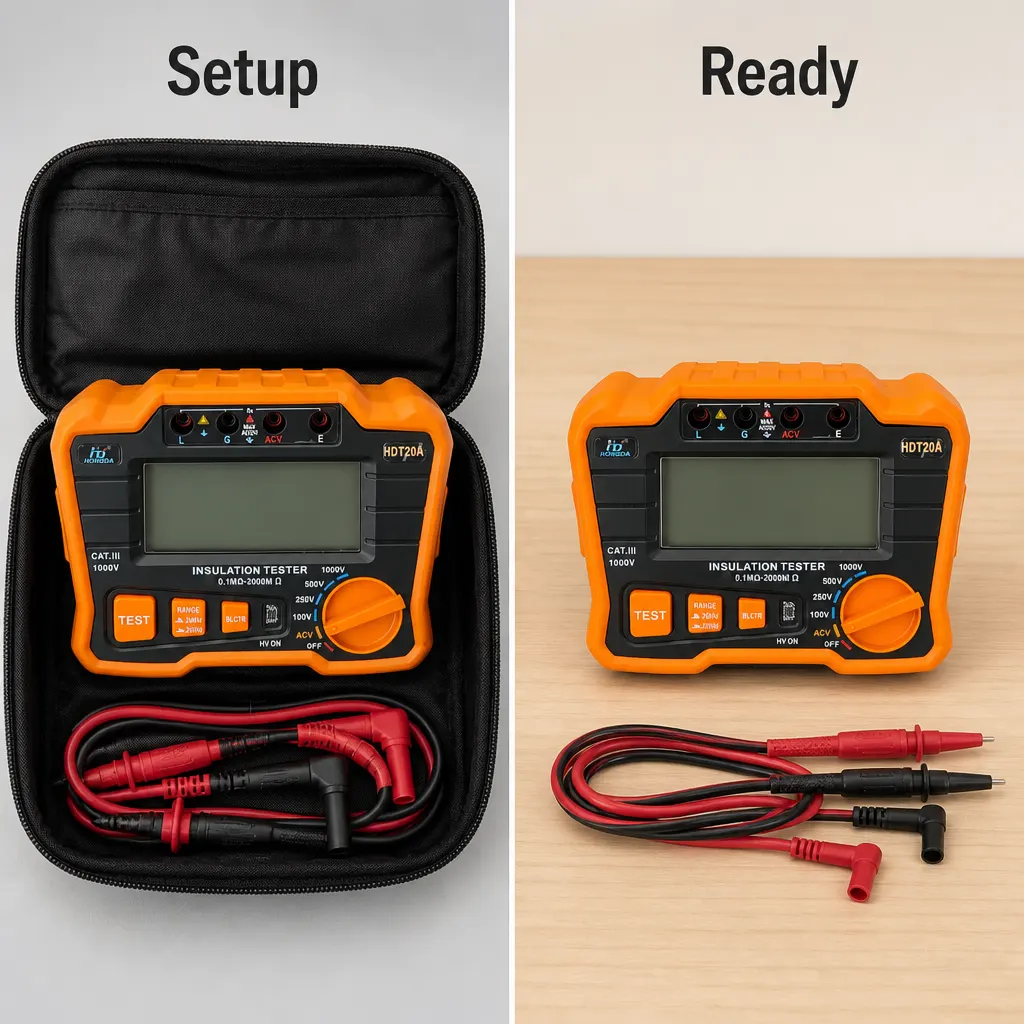
Short answer: A digital insulation resistance tester for electricians is suitable only when its documented range, leads, safety markings and instructions match the work being planned. Insulmeter lists the Hongda HDT20A Digital Insulation Resistance Tester, Orange, and the title identifies a 1000V model. The current page does not state measurement range, accuracy, safety category, maximum working voltage, selectable outputs, calibration route or a manufacturer manual. HSE guidance places the emphasis on planning, secure isolation, suitable equipment and competent people. Use the product page to identify the candidate, then obtain the missing documents before relying on it for an electrical decision.
Separate the instrument from the job
An electrician's selection starts with the item being assessed, the reason for the check and the record that must be produced. The current product page gives a model name, orange colour and 1000V title wording. It does not show that the instrument is suitable for every cable, appliance, motor, installation or environment an electrician may encounter.
The word digital describes the displayed format, not the quality of the measurement or the safety boundary. The manufacturer does not specify the accuracy, selectable outputs, measurement range, category, maximum working voltage, lead construction or calibration information on the written page.
| Selection field | Evidence on the page | Question still required |
|---|---|---|
| Brand and model | Hongda HDT20A | Does the supplied manual match this exact model? |
| Voltage wording | Title identifies a 1000V model | Which outputs and procedures are documented? |
| Electrical boundary | Not published | What category, maximum working voltage and environment limits apply? |
| Leads and records | Not published | What is supplied and how should results be recorded? |
Use a repeatable electrician's workflow
A written workflow prevents a tester purchase from becoming an informal permission to work. HSE guidance says equipment should be suitable for its task and environment, and people must be competent for the work or supervised by someone who is.
- Name the test object and the purpose of the insulation check.
- Confirm the required voltage, range and acceptance method from the governing procedure.
- Obtain the model manual and compare its leads, markings and limits with that procedure.
- Apply the site's isolation and re-energisation controls before connecting equipment.
- Record the reading with the item identity, method and responsible person.
Safety information that is not published
The current page does not publish category marking, maximum working voltage, conformity information, lead and probe construction, discharge behaviour, display limits, accuracy, calibration or battery details. The manufacturer does not specify those points in the written product information. A product title cannot substitute for the manual, risk assessment or safe system of work.
Do not use retail copy as a pass decision
HSE advises suitable checks and says specialised electrical equipment should be inspected and tested by someone with specific competence. A digital insulation tester can support a defined process, but its presence on a product page does not certify an installation, appliance or repair. If the required evidence cannot be obtained, choose a model with clearer documentation.
Related guides and product details
Buy for the documented electrician's task only after the HDT20A manual and safety information have been matched to the procedure. Read How to Choose a Digital Insulation Tester for related guidance. Read Insulation Resistance Tester for a Small UK Business for related guidance. Review the documented specification on the Hongda HDT20A Digital Insulation Resistance Tester, Orange product page before ordering.
Sources and safety context
- Supports the listed Hongda HDT20A model, 1000V title wording and orange SKU. Current Insulmeter product page.
- Supports planning, equipment suitability, isolation and competence for electrical work. HSE: Work on electrical equipment, machinery or installations.
- Supports risk-based inspection and testing and the need for specific competence with specialised equipment. HSE: Frequently asked questions on electrical safety.