
Short answer: A 1000V insulation resistance tester should be selected only after the required test voltage, equipment, procedure and operator competence are clear. Insulmeter lists the Hongda HDT20A Digital Insulation Resistance Tester, Orange, and its title identifies it as a 1000V digital insulation resistance tester. The page does not publish selectable test voltages, resistance range, accuracy, safety category, maximum working voltage, lead details, calibration information or a manufacturer manual. HSE guidance requires electrical work to be planned, energy sources isolated and people competent. Treat the listing as a candidate, not permission to test a live or unknown installation.
What the 1000V listing confirms
The current page names the Hongda HDT20A Digital Insulation Resistance Tester, Orange, and uses 1000V digital insulation resistance tester wording in the title. It also records a 1.0 kg packed logistics weight. That is useful product identity evidence, but packed weight is not operating weight and the title is not a complete electrical specification.
The listing does not publish the selectable test voltages, resistance measurement range, accuracy, safety category, maximum working voltage, conformity information, lead construction, display behaviour, calibration information or a linked manufacturer manual. The manufacturer does not specify those details on the written product page.
| Published detail | What it supports | What remains unknown |
|---|---|---|
| Hongda HDT20A, orange | Model and selected colour identity | Manual contents and operating limits |
| 1000V digital insulation resistance tester | Category wording in the product title | All selectable outputs and test conditions |
| 1.0 kg packed logistics weight | A parcel-weight record | Instrument weight, dimensions and handling |
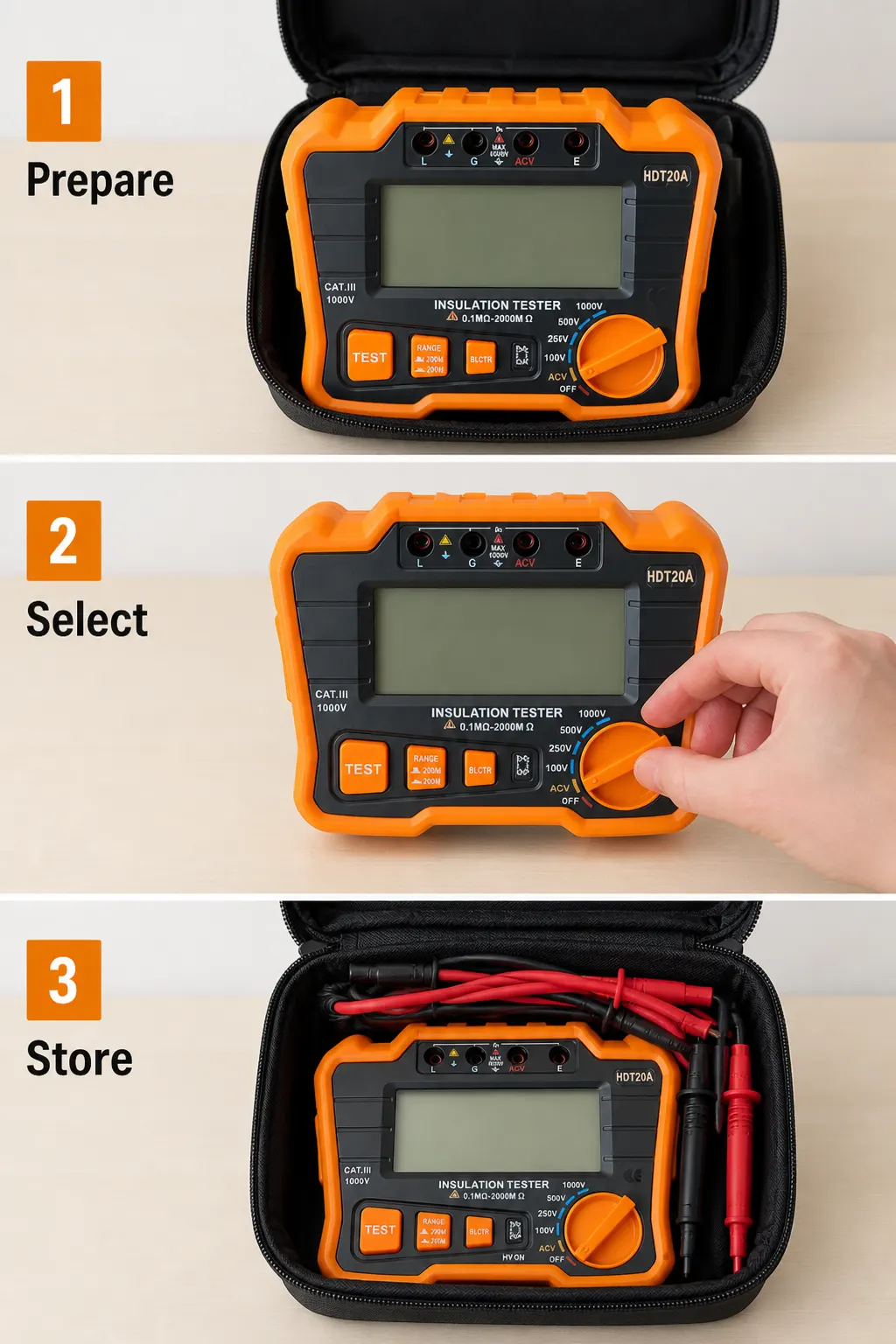
Plan the electrical work first
HSE says work on electrical equipment should be planned, sources of energy isolated and isolation secured so energy cannot be inadvertently removed. It also says people working on electrical equipment must be competent for the task or supervised by someone who is. Those controls come before choosing a display or pressing a test control.
- Define the equipment, test purpose and documented acceptance requirement.
- Identify the sources of energy and apply the planned isolation and re-energisation controls.
- Confirm that the person performing or supervising the work has suitable competence.
- Match the model manual, leads and environmental instructions to the planned task.
- Record the result through the workplace process rather than treating the retail page as a test record.
Do not turn a headline voltage into a specification
A 1000V title does not tell a buyer whether the instrument offers one output or several, how the measurement range is defined, how accuracy is stated, or what maximum working voltage and safety markings apply. It also does not establish discharge behaviour, lead construction or conformity. The manufacturer does not specify those points on the current written listing, so they must be confirmed before technical use.
Checks before buying or testing
Request the exact HDT20A manual, model-specific electrical specification, lead and probe information, safety category, maximum working voltage, conformity information and calibration route. If the responsible person cannot match those documents to the planned test, stop the purchase decision. A competent electrician may decide that another documented instrument is the safer fit.
Related guides and product details
Keep the HDT20A on the shortlist only when its model-specific documentation matches the planned test and the competent person responsible for the work. Read Digital Insulation Resistance Tester for Electricians for related guidance. Read How to Choose a Digital Insulation Tester for related guidance. Review the documented specification on the Hongda HDT20A Digital Insulation Resistance Tester, Orange product page before ordering.
Sources and safety context
- Supports the HDT20A identity, orange SKU, 1000V title wording and packed logistics weight. Current Insulmeter product page.
- Supports planned work, secure isolation, suitable equipment and competence requirements. HSE: Work on electrical equipment, machinery or installations.
- Supports suitable inspection or testing and the need for specific competence with specialised equipment. HSE: Frequently asked questions on electrical safety.