
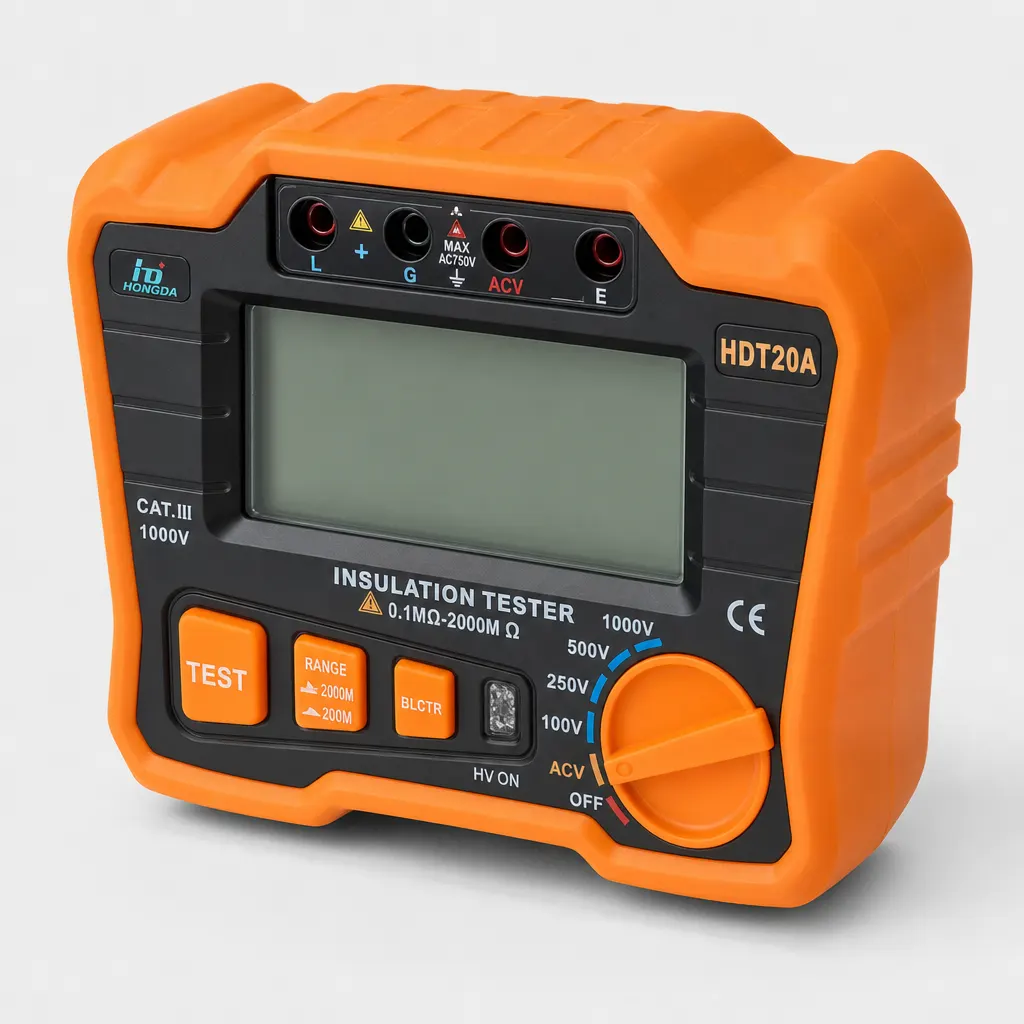
Short answer: For a small UK business, an insulation resistance tester should be bought as part of a controlled work process, not as a general answer to every electrical question. Insulmeter lists the Hongda HDT20A Digital Insulation Resistance Tester, Orange, with a title identifying a 1000V model and a recorded 1.0 kg packed logistics weight. The page does not publish accuracy, ranges, category marking, maximum working voltage, leads, calibration or a manufacturer manual. HSE guidance requires planned work, secure isolation, suitable equipment and competent people. Define who will test, what will be tested and what record is required before ordering.
Start with the workplace process
A tester becomes useful to a small business only when the business can explain when it is used, who is allowed to use it, what isolation is required and what happens to the item after a reading. The answer may differ between a repair bench, a facilities team and a service van.
HSE places responsibility on planned work, suitable equipment and competence. That makes the process a buying requirement. The instrument should fit the written task instead of becoming an informal substitute for a risk assessment or an electrical inspection regime.
| Business question | Evidence to record before purchase |
|---|---|
| Who performs the test? | Named competent person or supervision arrangement |
| What is tested? | Equipment type, test purpose and acceptance method |
| How is it made safe? | Isolation, lock-off and re-energisation controls |
| What is retained? | Item identity, reading, method, date and responsible person |
What the Insulmeter page currently publishes
The page identifies the Hongda HDT20A Digital Insulation Resistance Tester, Orange, and uses 1000V digital insulation resistance tester wording. It records a 1.0 kg packed logistics weight and gives current commerce information. These facts help identify the candidate, but they do not show that it covers every task a small business may encounter.
- Save the exact product identity and current listing date in the purchase record.
- Ask for the model manual, full electrical specification and package contents.
- Compare the documented ranges, leads and safety limits with the business procedure.
- Confirm who is competent to perform or supervise the work.
- Do not release the tester for use until the comparison is signed off.
Isolation and competence are not optional extras
HSE says electrical work should be planned, energy sources isolated and isolation secured against inadvertent re-energisation. It also says people must be competent for the task or supervised by someone who is. A small team may outsource the technical work, but it still needs to know where its responsibility ends and what information an external competent person requires.
Price does not answer the technical questions
The manufacturer does not specify the HDT20A's selectable test voltages, resistance range, accuracy, category, maximum working voltage, conformity information, lead construction, display behaviour, calibration or linked manual on the written page. Those gaps matter more than a low headline price when a result could affect repair, release or customer communication.
If the missing information cannot be supplied, choose a better-documented instrument or use a qualified service provider. Do not let a small-business budget turn an unknown safety boundary into an assumed one.
Related guides and product details
For a small UK business, buy the HDT20A only when the documented model limits, safe system of work and competent-person arrangements are all aligned. Read Insulation Resistance Tester UK: What to Verify for related guidance. Read 1000V Insulation Resistance Tester: What to Verify for related guidance. Review the documented specification on the Hongda HDT20A Digital Insulation Resistance Tester, Orange product page before ordering.
Sources and safety context
- Supports the HDT20A identity, 1000V title wording, orange SKU and packed logistics weight. Current Insulmeter product page.
- Supports planned work, isolation, suitable equipment and competence. HSE: Work on electrical equipment, machinery or installations.
- Supports specific competence for specialised inspection and testing. HSE: Frequently asked questions on electrical safety.